• You're one step from joining Typewriter Forum – Vintage Machines, Repair Tips & Collecting.
    Create a free account to post, follow threads, and never miss an update.  Sign up free →

Royal X

ecologito

New member
Joined
Jul 4, 2025
Messages
4
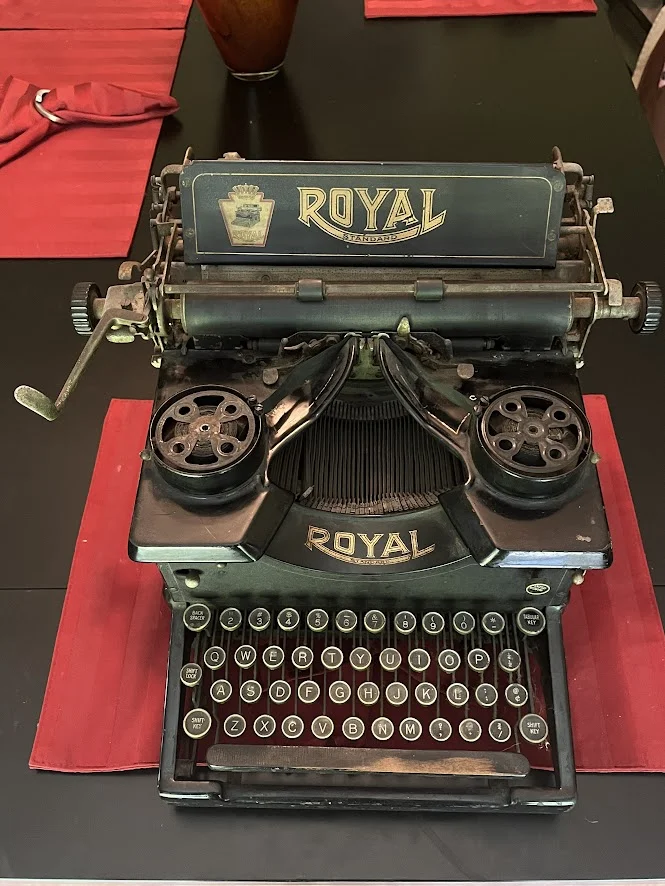
I have had this in the closet for way too long, trying to figure out what to do with it. Not sure if it is worth restoring, selling it as it is or take it to the dump. I search online gives me all of the above as viable options from folks selling them for $50 to $3k.


1751645755410.webp
 
Hi @ecologito

You've got yourself a Royal Model P portable - very nice machine from the 1920s!

Model Identification: Definitely a Royal Model P, produced from 1926 to around 1935. The telltale signs are all there: the distinctive boxy "flatbed" design (sometimes incorrectly called "flat-top" by novices), the classic Royal badge on the paper table, and what appears to be the signature duotone color scheme.

Dating the Beast: The Model P was produced from mid-1920s to mid-1930s, and based on the design elements visible, I'd peg yours circa 1927-1931. To nail down the exact year, you'd need to find the serial number (usually lurking on the back or under the carriage) and cross-reference it with the typewriter database.

Value? Don’t expect $3K. Quick scan of current market comps: a) Royal portables from the 1920s through 1940s are worth $500 to $800, b) Model P can typically be found for a few hundred dollars depending on condition — not as rare as we would think. 🫣 c) some recent eBay listings that I found actually sold show: A wood grain Model P with case sold for around $45, while working examples are listing between $120-$570. 👀

Your typewriter: Without a test drive of the typebars, carriage action, and ribbon advance mechanism, I'd estimate your machine falls in the $150-$400 range - closer to $150-$250 if it needs significant servicing, or $300-400 if it's mechanically sound with just cosmetic TLC needed. (I am always interested in adding to my collection, send me a DM please).

Restoration vs. Flip Decision: The Model P is notorious for “paint flaking issues! Your duotone finish appears intact, which is a plus. These machines CAN BE worth restoring; depends on your stamina, so to speak, to deal with it all.

Don't you dare take this beauty to the dump! 😱 Even in rough condition, these machines hold SOME value; I have a ballpark in my DM head. Every typewriter has some value, sometimes even for parts. This is a legitimate piece of typewriter history that helped establish Royal as the world's #1 typewriter company.

My advice? Either 1) sell her AS IS or 2) clean her up, get her serviced (investment $$), and enjoy the satisfying thwack of manual typing or sell to someone who'll appreciate this mechanical marvel! 📝✨ Good luck.

Ezra
 
(BTW, is was considered a “portable” in the 1920s. Fast forward 50 years to a Hermes or Lettera or Corsair and it’s FAR from truly being portable)
 
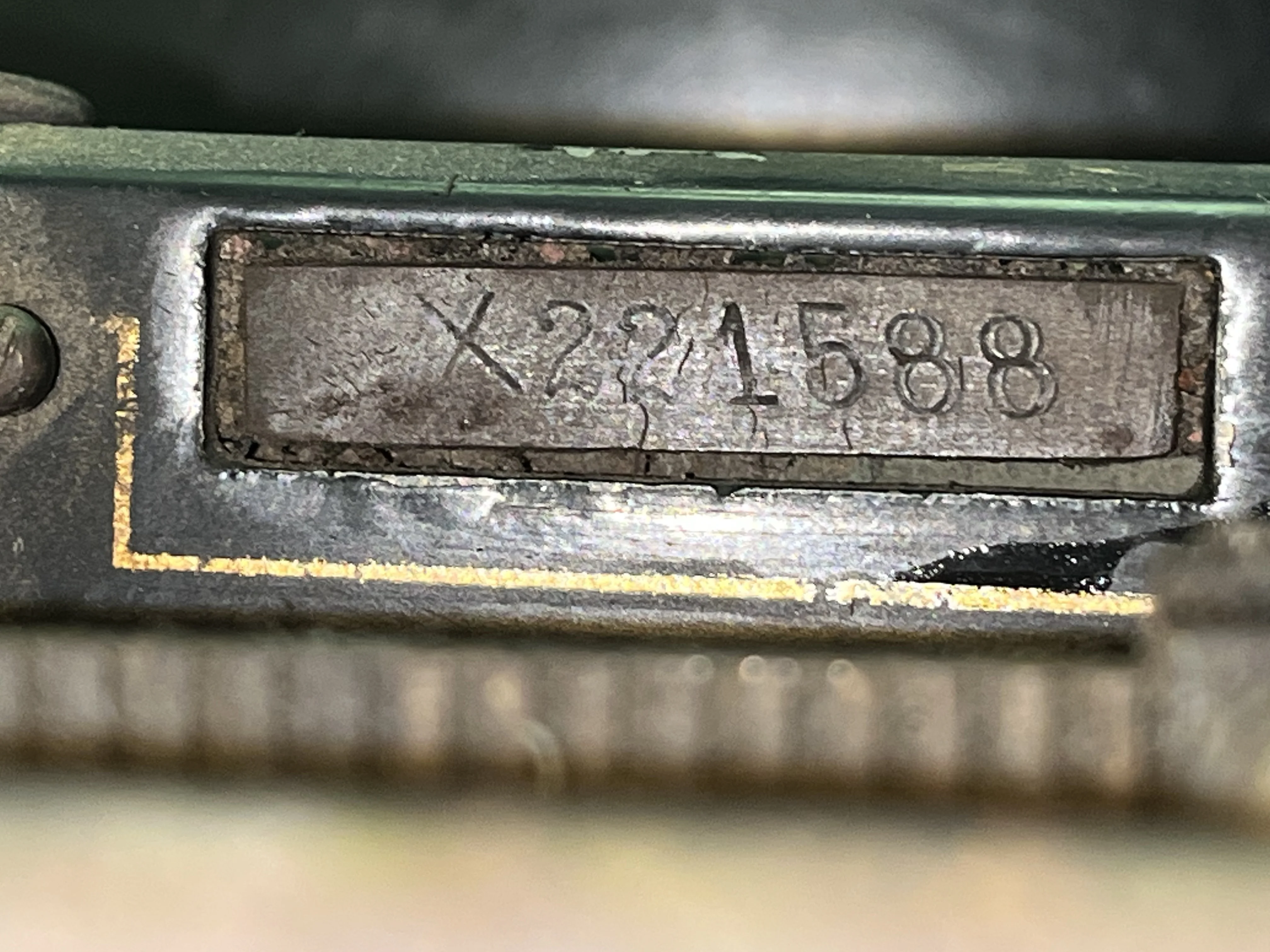
Hi @ecologito Good work! Well, mea culpa on the Model P identification - the eagle-eyed typospherian caught me jumping to conclusions based on visual similarity. 😅 Serial number X-221588 tells the REAL story here! (Humble pie consumed, corrections issued. 🥧)

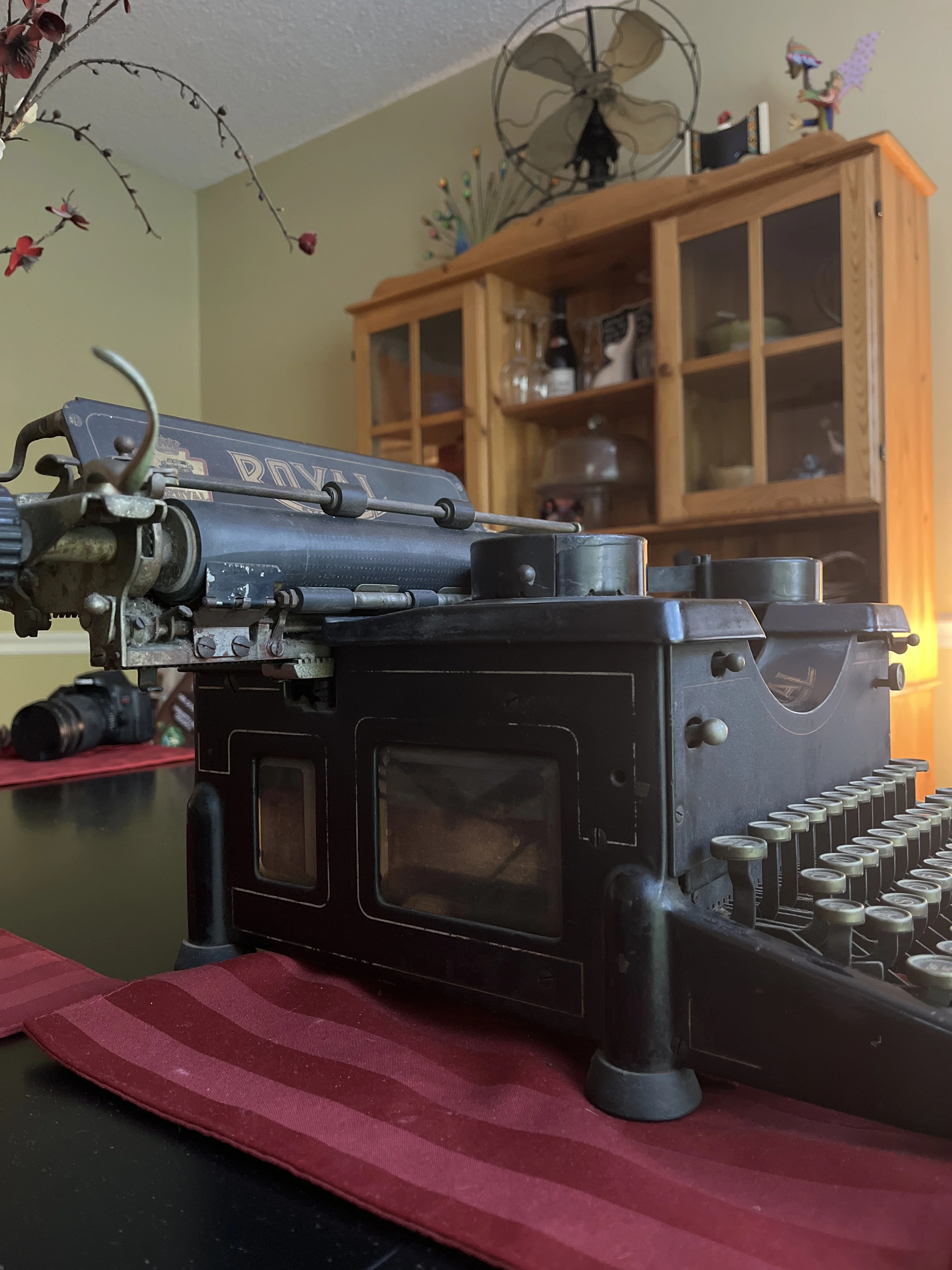
You've got yourself a Royal Model 10 ("X") - and with that X-prefix serial number X-221588, this beauty dates to approx 1916. What I mistook for the boxy Model P design is actually the Model 10's early dual beveled glass panel configuration. The Royal 10 came out in 1914 with original models having two beveled glass panes on each side -- are yous intact?

The Model P that I mentioned was indeed built on the same basic "chassis" and mechanical foundation as the Model 10 - same carriage escapement mechanism, identical typebar action, parallel ribbon advance systems, and nearly identical segment construction. Royal was clever about engineering efficiency (they became #1 after all), using the proven Model 10 architecture as the mechanical foundation for their "portable" line (still, not a portable compared to a Lettera 22 or Hermes Rocket. (So my initial assessment wasn't completely off-base regarding the fundamental mechanisms.)

The dual beveled glass panels (if intact) is the interesting part. In the mid-1920s, the two bevelled glass panels were replaced by single glass bevels on either side: can you post some side pics?

Reality check on value: 💰 Here's where we need to pump the brakes on those Facebook Marketplace dreams. People often see "antique typewriter" and think they've struck gold, imagining their machine is worth thousands. The harsh truth? Most Royal 10s sell for much less than folks expect.

Based on current eBay sold listings and auction results, your 1916 Royal 10 realistically falls in the (as mentioned before Model P related $$ too): $150-$400 range if mechanically sound, but drops to $75-$200 if it needs significant work. Even those gorgeous dual glass panels don't automatically make it a treasure - recent auction results show Royal 10s with glass damage selling as-found condition. (Remember, these are super bulky and not useful by the typewriter fanboys still using them, so unless lots of things fall into place...)

If it's museum-quality, fully functional, and comes with provenance (like "Hemingway's personal machine"), most vintage typewriters are worth more in sentimental value than cash value. Shipping costs alone often exceed what buyers are willing to pay! 📦💸

Can you actuate the typebars through their full stroke? Does the carriage advance properly on the escapement? Any sluggish action in the ribbon vibrator mechanism? Test that legendary Royal touch control - does the impression adjustment wheel engage the platen properly? Check if the mainspring tension in the drawband system maintains consistent carriage return!

Still a genuinely cool piece of typewriter history - a pre-WWI Royal 10 with dual glass panels, BUT definitely restoration needed based on visual, not dump-bound..... Just don't expect to retire on the proceeds. The real value is in the satisfaction of bringing a 108-year-old mechanical marvel back to life! 🎯✨. I'm personally always interested in projects like this. DM if selling (though my guess i shipping will be $100+)

Ezra

PS - Thanks again for keeping me honest on the model ID issue! The typosphere appreciates accuracy over ego. 😉
 
Nice job, @ecologito -- also adds some visual contrext for value, IMHO: Your Royal 10 is definitely showing its 108 years. That patina isn't just "dusty" - looks like oxidation, accumulated grime, and what appears to be some surface corrosion on the frame casting. The machine has that authentic "barn find" aesthetic that screams "project typewriter."

✅ Both beveled glass panels appear intact - that's huge! (Assume same on right side?) Missing or cracked glass can torpedo the value faster than a jammed typebar.

Red flags I see:

  • Missing case screw on the left side panel (typical failure point)
  • Heavy accumulation of decades-old dust and oxidation throughout
  • Ribbon mechanism appears to have old, dried ribbon remnants
  • That dull finish suggests the original "japanning" (paint) may need attention
Confirms we're solidly in the "restoration project" category, not the "clean and use" range, methinks. Expect the lower end of that $150-$400 spectrum unless everything functions smoothly.

Functional?? Can you actuate each typebar through its full stroke without binding? Does the carriage advance smoothly across the rack when you press keys? Test the ribbon vibrator - does it lift properly on each keystroke? Check if the platen (rubber roller) has any hardening or cracking. Most importantly, does the escapement mechanism engage consistently (when you type, does it move to next place?), or are there skipped spaces?

The drawband system under the carriage - any fraying or tension issues? Touch control wheel responsive?

She's a survivor with good bones, but this is definitely a "roll up your sleeves" candidate. Still beats the dump though! 🔧✨
 
Thank you for the kind words and encouragement on this project. 75% of the keys clear a full stroke, about 25% of them bind and don't come back down. The glass panels all 4 a present and not cracked. Like you mentioned everything is there for the most part it may just need some elbow grease and a lot of TLC.

Right now I don't have the time to get into this project. I have restored some old fans already and don't want to pick more projects. I am in Charlotte, NC and travel to Dayton, OH a couple of times each year.
 
Hi @ecologito ,


The binding typebar reality: Those stuck keys aren't just a "little oil will fix it" situation. I think likely looking at:

  • Seized pivots in the typebar segment requiring near-complete disassembly
  • Hardened lubricant in the universal bar linkages
  • Possible bent or misaligned type slugs from decades of impact
  • The escapement mechanism probably needs complete regulation and adjustment
  • That platen is almost certainly rock-hard after 108 years - new rubber or recovered platen essential for proper impression
A littl more elbow grease territory, IMHO - it's near-full mechanical overhaul. Each binding typebar needs individual attention: segment removal, pivot cleaning, linkage realignment, and reassembly with proper typewriter oil. The ribbon vibrator mechanism will need adjustment, drawband replacement, and carriage rail cleaning. Plus cosmetic restoration of that oxidized japanning.

You're looking at 40+ hours minimum for a proper restoration. Having tackled vintage fans, you know how these projects expand! One stuck typebar leads to discovering three more issues, then the touch control needs adjustment, then the bell doesn't ring... 🔧⏰

Smart move recognizing your bandwidth limitations! These old Royals are seductive but demanding mistresses.

Sent you a DM - might have some suggestions for your next steps that don't involve you becoming a full-time typewriter technician! 📨

Sometimes the wisest restoration decision (I've done it too) is knowing when to pass the torch to someone with more time than sense! 😉

Ezra
 
Back
Top